
1) The classic note taking
Encourages you to start way in advance of your exam because note taking can take up a lot more time than anticipated. When taking notes, you can either hand write them or  type them up on your computer. Though while typing on your computer you may go more quickly but research has shown that handwriting your notes enhances your understanding on the material and therefore your memory of the subject. But note taking doesn’t have to be a drag! Use colour! Highlighter! Underline and bold. In your note taking, add notes from both your lectures and textbook. But do not use word for word from your textbook.
2) The verbal encoding
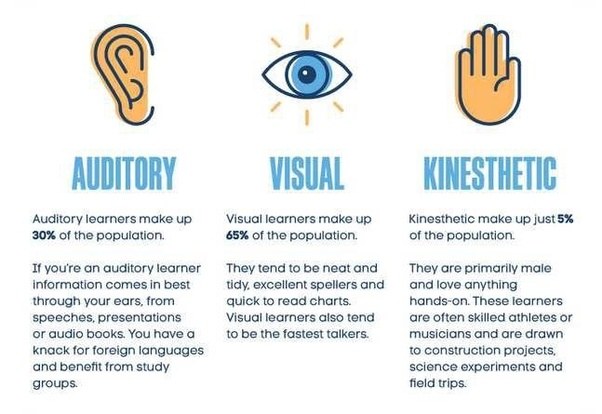
Another method where people prefer to be more vocal when studying such as repeating the information till you have it memorize, putting the information into a song or a rap. Facing the mirror and saying it to yourself or getting an audience such as family, friends or a collection of your stuff animals. Studies have found saying the information out loud not only forces you to think about and repeating the information will stick with you.
3) The Auditory Approach
Now this is less practice study method, but this is still a favorite this method suggests re-watching and listening to your professors’ lectures. This works especially well if your lecture is online and you can listen again after your class, or before your exam. Studies have found that recording yourself saying the information and then listening to it again and again has a better chance remembering the information, this works well when trying to remember key concepts.
4) The buddy system
This method is seen as underrated but the golden approach to studying, some find studying alone but some find that when studying with someone else opens another view and can be very beneficial to have someone to ask questions to and use the person to study off such as: using flash cards and guessing the answer. It has been proven that  explaining a concept to someone improves your own encoding of the concept and fortifies your ability to explain it again during your exam. Both would have made notes on the information in class and quizzing each other you may realize that you haven’t written the same concepts that they have.
5) The visual approach
Now studies have shown that this is to be the most efficient way of studying. Many students are visual learners and seeing the material in front of them is easier to understand. How to integrate visual approach while studying is to use graphs, diagrams, flowcharts and mind maps. Some have found this especially useful in classes such as biology, where concepts interlink and a change in one aspect affects many others. Another approach is putting your notes on the wall and seeing them.



 A friend in your class, or maybe on older sibling, if not mom or dad. Resources are everywhere, and it is up to you if you want to use them or not.

 Study Smart